Not sure what type of component you’re looking at? Use this list to identify the type of component and where you can learn more about it.

9V Battery Clip
To connect a 9V battery to your board.
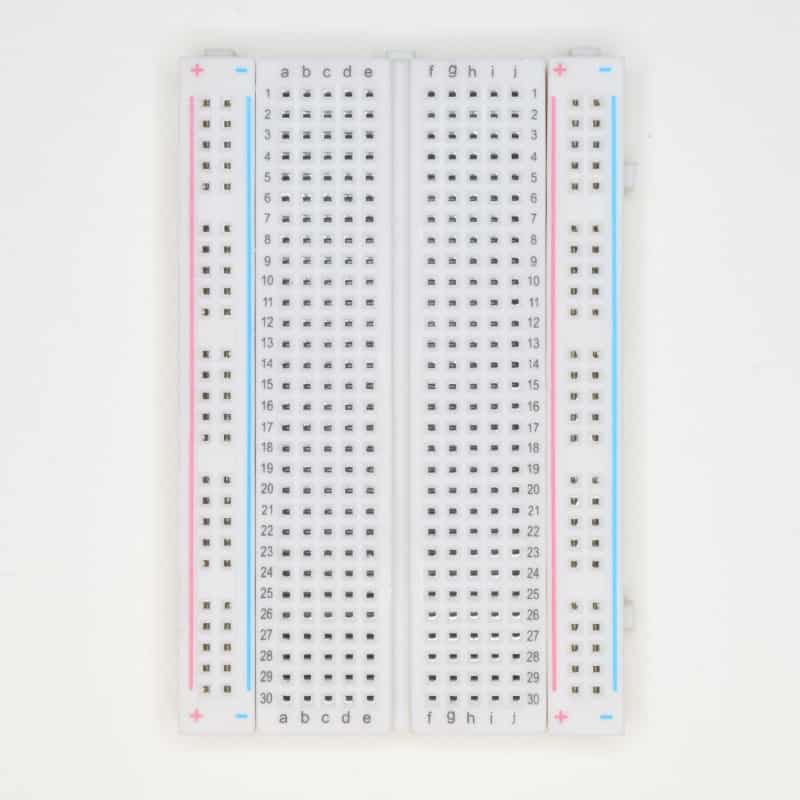
Breadboard
For connecting circuits to practice or test ideas. Learn about building circuits on a breadboard from this lesson (free for Ohmify members).
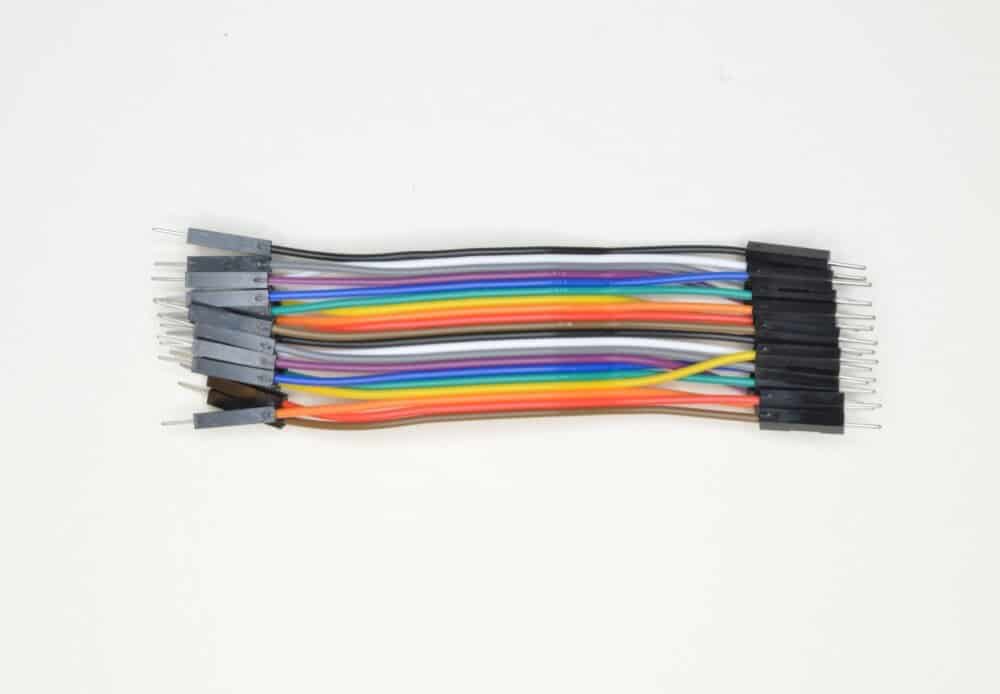
Breadboard wires
To make connections between rows or columns on the breadboard. Also called male-to-male Dupont or jumper wires.
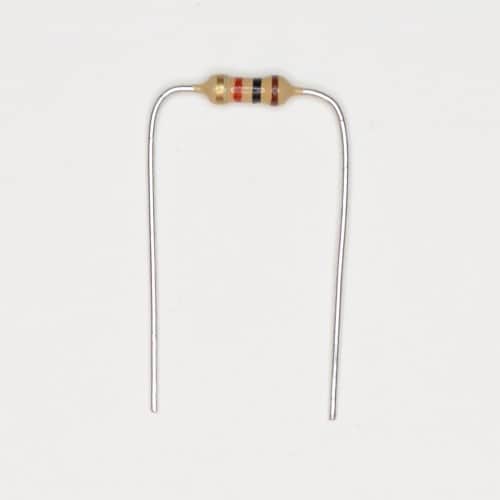
Resistor
The resistor reduces the current in a circuit. To find the value of a resistor you can either measure it with a multimeter, or you can use this resistor color guide chart.
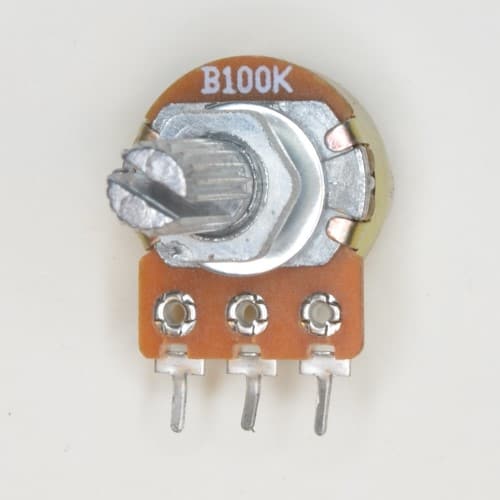
Potentiometer
A potentiometer is basically a resistor that changes resistance when you turn the shaft. Learn more about the potentiometer from this lesson (free for Ohmify members).
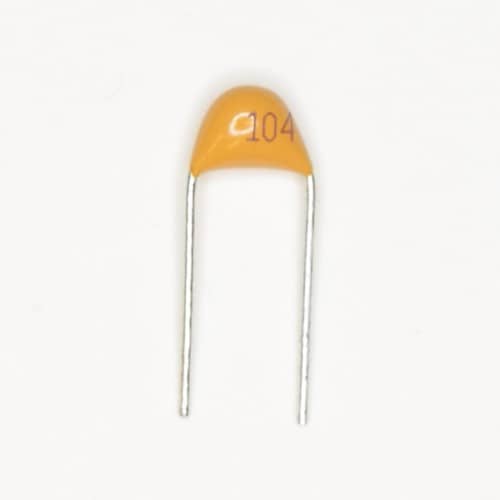
Ceramic Capacitor
Capacitors store energy, similar to a battery. For values up to 0.1 µF, capacitors are often ceramic and not polarized. To find the value of a ceramic capacitor, look up the code printed on it from this table. For example, 104 is 0.1 µF.
Learn more about the capacitor from the course Learn Electronics: The Capacitor (free for Ohmify members).
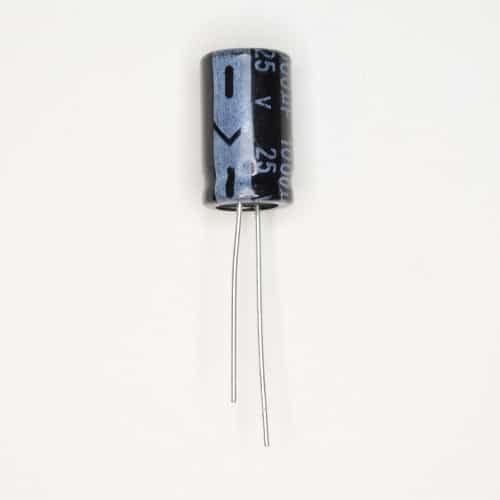
Electrolytic Capacitor
Capacitors store energy, similar to a battery. Capacitors with values of 10 µF and above are often electrolytic capacitors. These are polarized, which means it’s important that you connect the positive leg toward the plus side of the battery in your circuit.
Learn more about the capacitor from the course Learn Electronics: The Capacitor (free for Ohmify members).
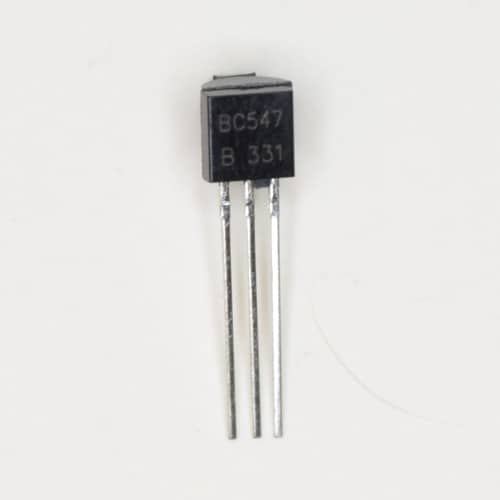
Transistor
You can use the transistor as a switch, or even to amplify signals. There are several types of transistors, and the only way to know what type you have is to check what is written on it. For example, a BC547 is an NPN transistor. But a BC557 is a PNP transistor.
Learn more about the transistor from the course Learn Electronics: The Transistor (free for Ohmify members).
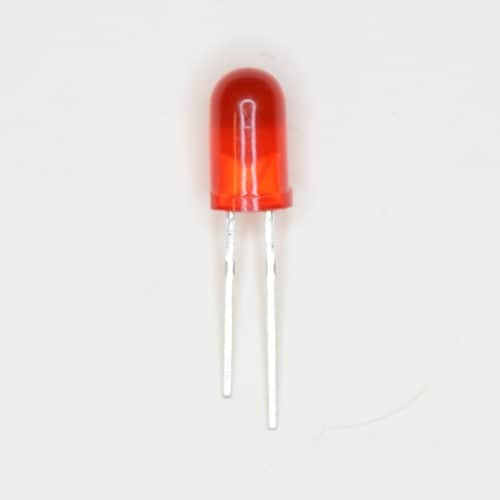
Light-Emitting Diode (LED)
The LED gives you light. The longest leg is the positive leg. If both legs are equally long, look for the flat edge of the LED housing – that’s the negative side.
Learn more about the LED from the course Learn Electronics: The Light-Emitting Diode (LED) (free for Ohmify members).
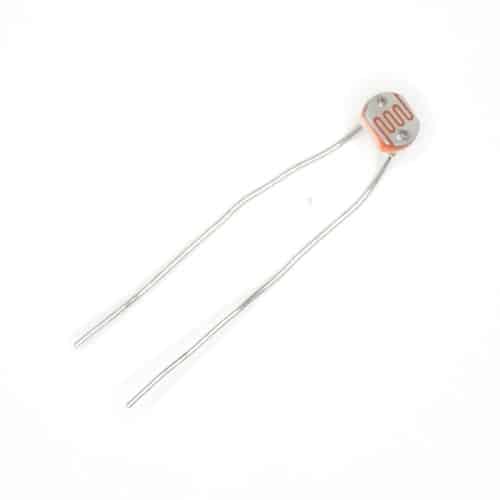
Photoresistor – also called Light Dependent Resistor (LDR)
The photoresistor is a resistor that changes its resistance based on how much light hits its head.
Learn more about the photoresistors from this lesson (free for Ohmify members).
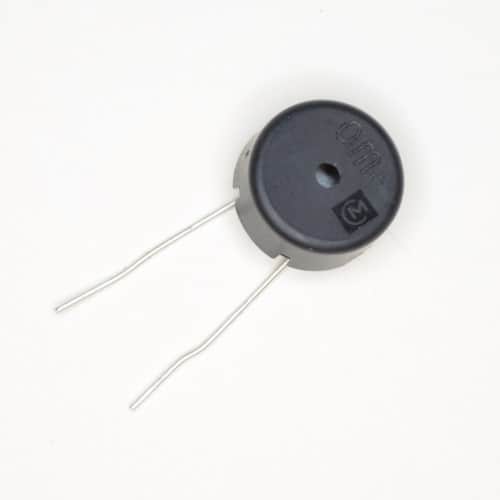
Buzzer (Passive)
A buzzer is a little component that makes sound. An active buzzer has some internal circuitry that creates a sound signal, so you can make sound by just connecting it to a battery. But a passive buzzer means that it does not have this circuitry, so you have to create an oscillating signal in order to make sound.
You can find an example circuit to make sound with a passive buzzer here (free for Ohmify members).
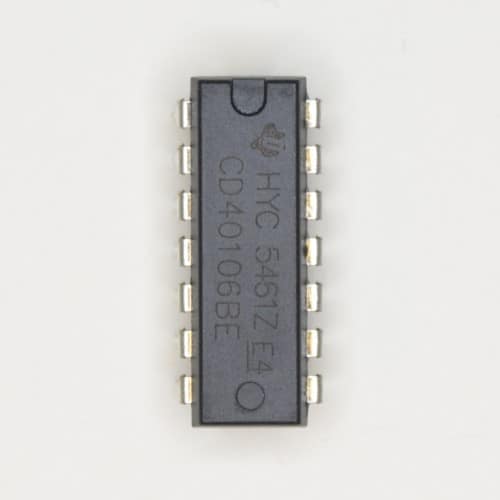
Schmitt Trigger Inverter IC (CD40106BE)
An integrated circuit with six Schmitt-triggered inverter gates. Often used to create an oscillator for blinking an LED or making sound.
To learn more, check out the course How To Make a Light Blink (free for Ohmify members).
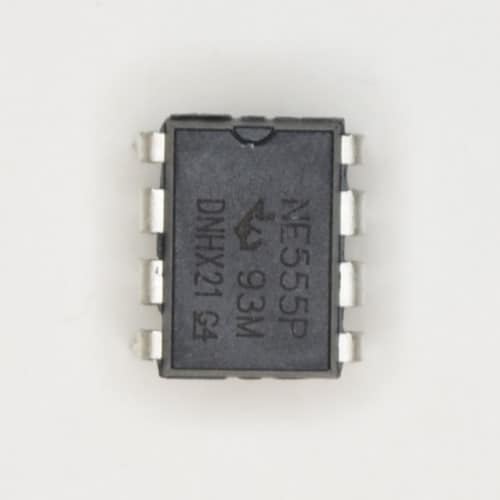
555 Timer IC (NE555P)
The 555 Timer is a handy little chip that you can use to blink lights, create sound, add timing operations to your project, and more.
To learn more, check out the course How The 555 Timer Works (free for Ohmify members).
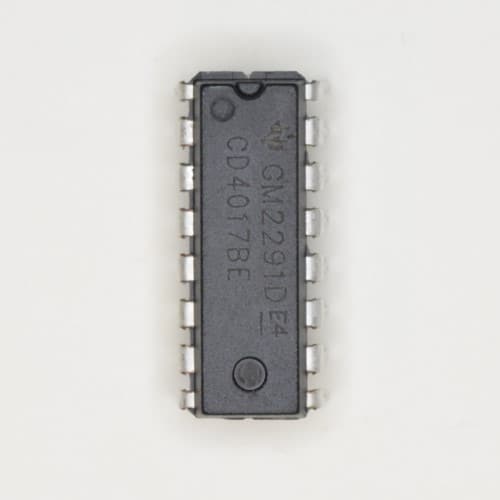
4017 Decade Counter IC (CD4017BE)
The 4017 Decade Counter IC is a chip that you can build several fun circuits with, like a running LED display or an analog synth sequencer. Check out the courses (free for Ohmify members): Running LEDs circuit and analog synth sequencer.
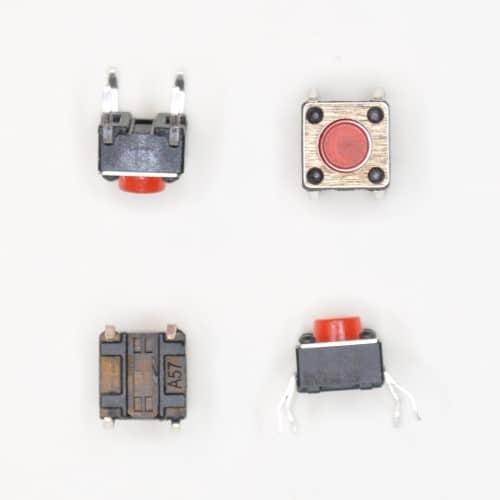
Pushbuttons
Pushbuttons are switches that are normally open, but when you push the button they become closed for as long as you push the button.
Learn more about the pushbutton here (free for Ohmify members).